
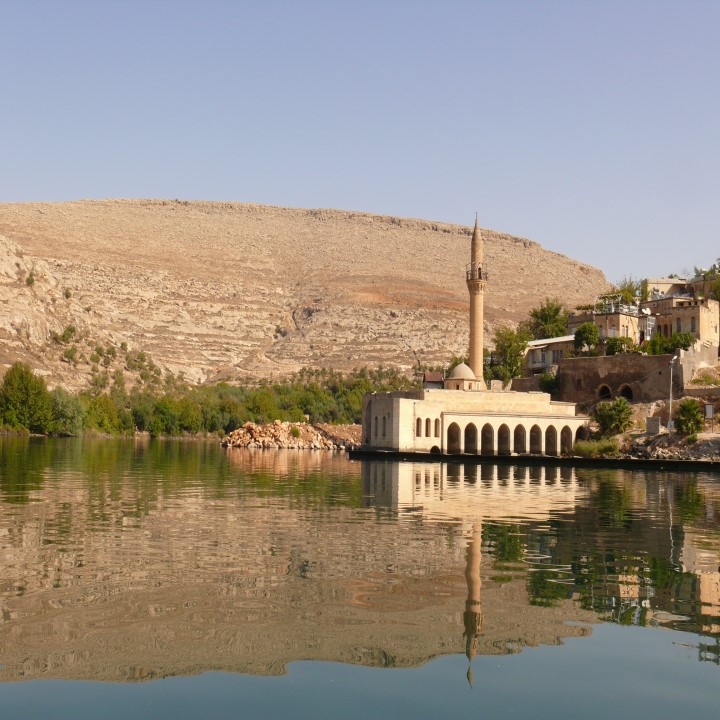
Şanlıurfa
Area of Şanlıurfa
Şanlıurfa Province is a province in southeastern Turkey. The city of Şanlıurfa is the capital of the province which bears its name. It has an area of 18,584 km² and it is the largest province of Southeast Anatolia with Adıyaman to the north; Syria to the south; Mardin and Diyarbakır to the east; Gaziantep to the West. Şanlıurfa includes several major components of the Southeastern Anatolia Project designed to: exploit the hydropower potential of the Tigris and Euphrates Rivers; dramatically expand irrigation for agriculture; and develop the economy of the region. Şanlıurfa’s average annual growth rate between 1985 and 1990 was 4.6%, considerably higher than both the national and regional averages.
Population
The population is 1,845,667 (2014). Population in 1990 was 1,001,455; 551,124 in the district centers, 450,331 in rural villages. By 2000, the population of Şanlıurfa province had grown to 1,436,956 and that of Urfa city, 829,000. The province has a population, consisting of Kurds, Arabs, Turks and Yazidi. Kurds are the majority in the province.
Districts
The city has 11 districts. Below are the districts of Şanlıurfa:
Urfa (Central district)
Akçakale
Birecik
Bozova
Ceylanpınar
Halfeti
Harran
Hilvan
Siverek
Suruç
Viranşehir
Small History
Şanlıurfa is a very historical city that has hsted several nations in it throughout the years. But it turned out to be a part of the Republic of Turkey. The Ottoman Empire was defeated in the first World War. Urfa, an independent Sanjak of the Ottoman Empire, was invaded by the British on 24 March 1919 in the days following the armistice of Mondros. In 1919, Urfa had 80,000 inhabitants. It had a good driveway and the city was a beautiful city that was very well built. Its streets were paved and there was also a good and very useful water system. With the arrival of the invaders, both Muslim and Christian Urfans were under pressure from the occupation forces. About six months later, the British had left the city to the French. With the departure of the British from Urfa on 30 October 1919, the French invaded Urfa. After the occupation of Urfa, as in all Anatolia, Urfa began to struggle for liberation against the invaders. In the meantime, some of the Armenian Christians of Urfa, who were driven by the French and took power from them, began to fight with the Muslims of Urfa, who had lived with the French for many years. With the struggle of the Urfa gangs on 11 April 1920, urfa was officially purged from the French and was attached to the Republic of Turkey. Thereupon the Christian people in the city emigrated to Syria.
Places to Travel
The province is famous for its Abrahamic sites such as Balıklıgöl, where Prophet Abraham was cast by Nimrod into fire that is believed to have turned to water. Within the province, approximately 12 km northeast of the city of Şanlıurfa, is the pre-historic site of Göbekli Tepe, where continuing excavations have unearthed 12,000-year-old things dating from the early Neolithic period, considered to be the oldest temples in the World.
These are some of the popular places to visit:
Prophet Ibrahim (Abraham)’s birthplace
Prophet Ayyub (Job)’s cave and tomb
Prophet Alyasa (Elisha)’s Tomb
Imam Bakir’s Tomb
Shaykh Hayat al-Harrani’s Tomb
The first burial place of Said Nursi
Rahma Hatun’s Tomb
Neolithic Temple at Göbekli Tepe
Neolithic Settlement at Nevalı Çori
Transportation
İn Şanlıurfa you can use minibus, bus and taxi. You can get to Şanlıurfa via train, bus or you can use plane by flying to Şanlıurfa GAP airport.
Management
Urfa is managed by Zeynel Abidin Beyazgül.
Konuşarak Öğren’den bir video
Öğrenci deneyimlerinden iş dünyasına, farklı konulardaki içeriklerimizden senin için seçtiğimiz videoya göz at.